Language is the axis along which the self encounters the world. The seam flames. Many of us spend our lives captivated by that slow burn. Some long to pass through the fire, imagining they will arrive on the other side of themselves scorched pure, welcomed, free forever from misunderstanding and explanation. Others are content just to study the charcoal remnants, the serrated shadows cast, the jagged lines of red and blue and green flame.
Wednesday, July 02, 2008


Tuesday, June 10, 2008
Some Factz About Powerset
Powerset is a new search engine that uses natural language processing (nlp) to return results that are both more varied and more accurate than google's. NLP technology extracts and integrates meaning from linguistic structures and the relationships between words, instead of treating all text as strings of unrelated key terms. It's pretty rockin'.
For example, the queries "What did Hillary say about Bill?" and "What did Bill say about Hillary?" return a fairly similar set of somewhat useful results in google. Scanning them, it is evident that they were brought up by the words "hillary," "bill," and "say." No synonyms or verb conjugations or permutations were returned. Although these sentences contain the same keywords, they don't at all mean the same thing -- but google treats them more or less as if they did.
The results of the same queries in Powerset reflect the subtlety of the tool. It seems to grasp the "aboutness" of the question, and brings back entries that contain more than verbatim pieces of the query. Verbs like "claim" and "vow" and "state" are brought back as variants of "say."
One of the coolest things about Powerset is the list of "Factz" that appears along with the traditional list of links. Factz take the form subject-verb-object and can add up to a wonderful list of simple but unexpected sentences describing the subject of the query.
As with any complex process, its mistakes can be even more impressive than its successes because they reveal how much work it's actually doing. I entered the query "What did Britney do?" and learned that: "Britney speared songs and samples." The parser is so enthusiastic that it went right ahead and parsed her last name! It's endearing, like the errors of overgeneralization children make, but also indicative of the powerful linguistic processes humming beneath the surface.
And although it couldn't tell me where Jimmy Hoffa is, it does know who killed Laura Palmer.
For example, the queries "What did Hillary say about Bill?" and "What did Bill say about Hillary?" return a fairly similar set of somewhat useful results in google. Scanning them, it is evident that they were brought up by the words "hillary," "bill," and "say." No synonyms or verb conjugations or permutations were returned. Although these sentences contain the same keywords, they don't at all mean the same thing -- but google treats them more or less as if they did.
The results of the same queries in Powerset reflect the subtlety of the tool. It seems to grasp the "aboutness" of the question, and brings back entries that contain more than verbatim pieces of the query. Verbs like "claim" and "vow" and "state" are brought back as variants of "say."
One of the coolest things about Powerset is the list of "Factz" that appears along with the traditional list of links. Factz take the form subject-verb-object and can add up to a wonderful list of simple but unexpected sentences describing the subject of the query.
As with any complex process, its mistakes can be even more impressive than its successes because they reveal how much work it's actually doing. I entered the query "What did Britney do?" and learned that: "Britney speared songs and samples." The parser is so enthusiastic that it went right ahead and parsed her last name! It's endearing, like the errors of overgeneralization children make, but also indicative of the powerful linguistic processes humming beneath the surface.
And although it couldn't tell me where Jimmy Hoffa is, it does know who killed Laura Palmer.
Friday, June 06, 2008
Robot Love
In the San Francisco BART stations, the regular arrival and departure of the southbound trains are announced in the prerecorded, carefully inflected glint of a machine's voice pitched to that of a human woman. The north- and eastbound trains are hailed by the equally smooth tones of an electronic man.
From 4:00 am to about 1:00 am the two voices take turns reading the following haiku to each other.
Now approaching
nine-car Fremont
train platform
one.
Eight-car Daly City
train
arriving in
twelve
minutes.
Ten car Dublin-
Pleasanton train arriving
in
three
minutes.
I used to wonder if the same conversation continued during the four-hour mid-night gap when the lines go dark.
Eight-car Millbrae
train
arriving in
three hours twenty-
two minutes.
Or if they used the time to discuss other things.
Did you see that fallen-
faced man down
that Miller light
like it was sun-
light?
Two pigeons trapped
at Montgomery flapped
the dust
right off
the floor
'til it shone.
Or perhaps I'm the only one who imagines companionship means talking all night and they are happy to let a bit of silence course down those still tunnels.
From 4:00 am to about 1:00 am the two voices take turns reading the following haiku to each other.
Now approaching
nine-car Fremont
train platform
one.
Eight-car Daly City
train
arriving in
twelve
minutes.
Ten car Dublin-
Pleasanton train arriving
in
three
minutes.
I used to wonder if the same conversation continued during the four-hour mid-night gap when the lines go dark.
Eight-car Millbrae
train
arriving in
three hours twenty-
two minutes.
Or if they used the time to discuss other things.
Did you see that fallen-
faced man down
that Miller light
like it was sun-
light?
Two pigeons trapped
at Montgomery flapped
the dust
right off
the floor
'til it shone.
Or perhaps I'm the only one who imagines companionship means talking all night and they are happy to let a bit of silence course down those still tunnels.
Wednesday, May 14, 2008
Lily Bart and I
Lily Bart, the heroine of Edith Wharton's The House of Mirth is torn. She doesn't have much money but she does have class and charm and beauty, and a strong sense that she belongs in the only world she has ever known: the capital-S Society of calling cards and country estates and professional leisure.
Unable to sustain this lifestyle on the strength of her own means, she has two options. The long-term solution is to marry a wealthy dullard and install herself in permanent comfort. The short-term fix is to trade on the grace and allure that (she hopes) make her indispensable to the friends who tote her around to exotic destinations and prestigious gatherings.
The hypothetical reader I am about to take issue with might see Lily Bart's struggle as antiquated, and take it as an opportunity to gloat, as a twenty-first century woman, about how we've been liberated from the petty concerns of a society that offered women only men as rungs on achievment's laddr. This reader might deem the choice Lily agonizes over an illusion, declaring that either marrying or charming men out of their money amount to the same thing: a genteel form of prostitution.
But I couldn't refrain from gasping with recognition as I walked down Fifth Avenue with her and lay awake listening to her worries at night. Lily Bart is not just caught between marriage and destitution, status and shame, but between pragmatic compromise and idealistic daring. She can rise by swearing love to someone she does not and sacrificing a piece of herself in the bargain, or she can fall on her own terms, in her own skin, alone. The only thing she cannot do is avoid the choice.
A very modern predicament, indeed.
Unable to sustain this lifestyle on the strength of her own means, she has two options. The long-term solution is to marry a wealthy dullard and install herself in permanent comfort. The short-term fix is to trade on the grace and allure that (she hopes) make her indispensable to the friends who tote her around to exotic destinations and prestigious gatherings.
The hypothetical reader I am about to take issue with might see Lily Bart's struggle as antiquated, and take it as an opportunity to gloat, as a twenty-first century woman, about how we've been liberated from the petty concerns of a society that offered women only men as rungs on achievment's laddr. This reader might deem the choice Lily agonizes over an illusion, declaring that either marrying or charming men out of their money amount to the same thing: a genteel form of prostitution.
But I couldn't refrain from gasping with recognition as I walked down Fifth Avenue with her and lay awake listening to her worries at night. Lily Bart is not just caught between marriage and destitution, status and shame, but between pragmatic compromise and idealistic daring. She can rise by swearing love to someone she does not and sacrificing a piece of herself in the bargain, or she can fall on her own terms, in her own skin, alone. The only thing she cannot do is avoid the choice.
A very modern predicament, indeed.
Thursday, May 08, 2008
The Godot of Sitcoms
"Mais, à cet endroit, en ce moment, l’humanité c’est nous, que ça nous plaise ou non."
But in this place, in this moment, mankind is us, whether we like it or not.
-Vladimir to Estragon, En Attendant Godot
Although David Brent, the boss on the BBC series The Office, does not start off Season One with much that could objectively grant him bragging rights -- a low-level management position in an office of people who consider him, at best, a clown, coupled with an overbearing demeanor and an in ability to read social cues -- he boasts unapologetically about his skills as a businessman and an entertainer, offers unwanted advice, and fails to navigate even the most straightforward personal encounters again and again and again. His is the swaggering persona you long to see taken down, not subtly with a well-placed jibe, but dramatically and decisively, perhaps with a battering ram.
Over the course of Season Two, he is, indeed, taken down until he is face to face with the pathetic fragility of all the separate failings he was once able to assemble into an identity. I imagine the arc of his career like the trunk of this elephant: one grand swoop down.

Of course by this point it is not satisfying for the viewer, but sad and humbling, and it would be entirely unbearable were it not for the very slight rise at the bottom of the trunk. It is hardly noticeable, hardly a rise at all, but unmistakably present, a leveling off, a flaring out. At the end of this trunk is the residue of humanity accorded to David Brent and to all of us.
The minimalist aesthetic of The Office -- the dingy set, absent soundtrack, and its willingness to linger in the awkward pause after a joke has fallen flat or an exaggeration been unmasked -- is perfectly suited to its ethical project. It does not turn away from its characters. It does not punish the weak and then stalk off in self-congratulatory triumph to celebrate with the noble. Instead, it lingers far longer than we expect with the misfortunate, considering how it is, and what it is like, to continue on, and on and on, even as the outlook bleakens.
But in this place, in this moment, mankind is us, whether we like it or not.
-Vladimir to Estragon, En Attendant Godot
Although David Brent, the boss on the BBC series The Office, does not start off Season One with much that could objectively grant him bragging rights -- a low-level management position in an office of people who consider him, at best, a clown, coupled with an overbearing demeanor and an in ability to read social cues -- he boasts unapologetically about his skills as a businessman and an entertainer, offers unwanted advice, and fails to navigate even the most straightforward personal encounters again and again and again. His is the swaggering persona you long to see taken down, not subtly with a well-placed jibe, but dramatically and decisively, perhaps with a battering ram.
Over the course of Season Two, he is, indeed, taken down until he is face to face with the pathetic fragility of all the separate failings he was once able to assemble into an identity. I imagine the arc of his career like the trunk of this elephant: one grand swoop down.
Of course by this point it is not satisfying for the viewer, but sad and humbling, and it would be entirely unbearable were it not for the very slight rise at the bottom of the trunk. It is hardly noticeable, hardly a rise at all, but unmistakably present, a leveling off, a flaring out. At the end of this trunk is the residue of humanity accorded to David Brent and to all of us.
The minimalist aesthetic of The Office -- the dingy set, absent soundtrack, and its willingness to linger in the awkward pause after a joke has fallen flat or an exaggeration been unmasked -- is perfectly suited to its ethical project. It does not turn away from its characters. It does not punish the weak and then stalk off in self-congratulatory triumph to celebrate with the noble. Instead, it lingers far longer than we expect with the misfortunate, considering how it is, and what it is like, to continue on, and on and on, even as the outlook bleakens.
Losing the Literal
It is not rare to hear plaints of the sort "I waited for a table at Boogaloo's for literally five million hours until I was so hungry I had to go to WeBe instead!!" or endorsements such as "This bowl of Honey Bunches of Oats with Real Chocolate Clusters is literally the most delicious thing I have ever tasted." These statements do not read as flip or caustic, and I don't even think they're intended as ironic although by definition they are since "literally" is being used in place of its opposite, "figuratively." (Is it ironic that these ironic statements are meant earnestly?)
This would lead one to believe that the standard stock of comparatives and superlatives are not sufficient to the intensity at which we register quotidian disappointments and thrills. To describe our experiences in less forceful terms ("I waited for a very long time," "This tastes good") would make them seem muted, drained of color, hardly worthy of retelling...British, even, in their damp calm. The French may offer such limp praise as "well, it wasn't terrible" but Americans have patience for only the very best and the very worst.
Or perhaps it doesn't have to do with what we feel but with how we know. A generation steeped in narrative, swimming in RSS feeds and news aggregators, in videoblogs and celebrity profiles and HBO mini-series, we watch the artificial and the actual shape each other. When a real University (Cornell) can actively recruit a cartoon character (Alex Doonsebury), there is no question of art imitating life anymore than we imitate our own reflections in a mirror.
The literal is most useful to us as a figure for something else.
The literal is most useful to us as a figure for something else.
Wednesday, March 26, 2008
Watches without Faces
Il prétend que Dieu, c'est-à-dire l'auteur de nous et de nos alentours, est mort avant d'avoir fini son ouvrage; qu'il avait les plus beaux et vastes projets du monde et les plus grands moyens; qu'il avait déjà mis en oeuvre plusieurs de ces derniers, comme on élève des échafauds pour bâtir, et qu'au milieu de son ouvrage il est mort; que tout à présent se trouve fait dans un but qui n'existe plus, et que nous, en particulier, nous nous sentons déstinés à quelque chose dont nous ne nous faisons aucune idée; nous sommes comme des montres où il n’y aurait point de cadran, et dont les rouages, doués d’intelligence, tourneraient jusqu’à ce qu’ils se fussent usés, sans savoir pourquoi et se disant toujours: puisque je tourne, j’ai donc un but.
-Benjamin Constant
He claims that God, that is the author of ourselves and settings, died before his work was complete; that he had the most beautiful -- the vastest -- projects for us and the most extraordinary means to achieve them; that he had already begun assembling the latter, as one would raise a scaffold before building, when in the middle of his work he died; that all of creation now finds it was designed for a purpose that no longer exists, and that we, in particular, feel ourselves to be destined for something of which we cannot summon the faintest idea: we are like watches without faces whose gears, graced with self-awareness, will turn until they are worn out, never knowing why but repeating over and over: since I'm turning, I have a goal.
-tr. The Bunny
This passage -- especially that last line with its lovely sybillant rush "jusqu’à ce qu’ils se fussent usés" that I lost in the English version -- has been stuck in my head for the past few months. I couldn't figure out for a long time whether it was a statement of hope or despair...but today it seems to be just enough to hold onto.
-Benjamin Constant
He claims that God, that is the author of ourselves and settings, died before his work was complete; that he had the most beautiful -- the vastest -- projects for us and the most extraordinary means to achieve them; that he had already begun assembling the latter, as one would raise a scaffold before building, when in the middle of his work he died; that all of creation now finds it was designed for a purpose that no longer exists, and that we, in particular, feel ourselves to be destined for something of which we cannot summon the faintest idea: we are like watches without faces whose gears, graced with self-awareness, will turn until they are worn out, never knowing why but repeating over and over: since I'm turning, I have a goal.
-tr. The Bunny
This passage -- especially that last line with its lovely sybillant rush "jusqu’à ce qu’ils se fussent usés" that I lost in the English version -- has been stuck in my head for the past few months. I couldn't figure out for a long time whether it was a statement of hope or despair...but today it seems to be just enough to hold onto.
Friday, March 14, 2008
Por que?
If there's anything I've learned from reading my own blog over the years it's that prepositions are treacherous. So when I decided a few weeks ago that I wanted to teach myself Spanish (also treacherous), I wasn't surprised to encounter a new subtlety in a word I thought I knew.
My Spanish grammar reference book explains the difference between por and para spatially, since the common dream of all prepositions is to unite in the universally accessible land of volume and direction, released from the confines of a particular syntax.
"To picture the meaning of the preposition por, imagine an arrow, representing motion, inside or alongside a box. This preposition refers to movement within or alongside a specific space, depending on context" (p. 96).
Although both of these prepositions can be translated as "for," por more closely corresponds to "because," indicating the underlying cause driving a particular action. It also denotes duration ("I stayed for three hours"), passage ("He entered by the front door"), and agency/instrumentality ("She came by plane," "The book was written by them").
"The underlying concept involved with the preposition para can be conceptualized as an arrow moving toward a box. Para represents movement toward a specific space, in the direction of that space" (p. 97).
Para can be rendered as "in order to" -- it denotes the outcome an action is driving towards.
Although this is a distinction we can make in English, we don't often choose to. "For" is so convenient, always at hand, and in spite of its size has a certain gravity. Starting a sentence with "for" can be downright poetic (For one the amaryllis and the rose...). "In order to" is so clunky, "because" suggests petulance or scolding.
Yet constantly blurring cause and effect -- both of which are nestled into the single syllable of "for" -- can lead to sloppy thinking. For example, in trying to tease apart what I am doing and what I want to be doing, I end up with this confusing set of statements:
Why do I work?
I work for money
I work for the praise of my superiors
I work for the health of a community
I work for the success of a company
I work for the sake of keeping busy
I work for a promotion, to uncover new opportunities
I work for the maintenance of my stability
Pero por que trabajo?
My Spanish grammar reference book explains the difference between por and para spatially, since the common dream of all prepositions is to unite in the universally accessible land of volume and direction, released from the confines of a particular syntax.
"To picture the meaning of the preposition por, imagine an arrow, representing motion, inside or alongside a box. This preposition refers to movement within or alongside a specific space, depending on context" (p. 96).
Although both of these prepositions can be translated as "for," por more closely corresponds to "because," indicating the underlying cause driving a particular action. It also denotes duration ("I stayed for three hours"), passage ("He entered by the front door"), and agency/instrumentality ("She came by plane," "The book was written by them").
"The underlying concept involved with the preposition para can be conceptualized as an arrow moving toward a box. Para represents movement toward a specific space, in the direction of that space" (p. 97).
Para can be rendered as "in order to" -- it denotes the outcome an action is driving towards.
Although this is a distinction we can make in English, we don't often choose to. "For" is so convenient, always at hand, and in spite of its size has a certain gravity. Starting a sentence with "for" can be downright poetic (For one the amaryllis and the rose...). "In order to" is so clunky, "because" suggests petulance or scolding.
Yet constantly blurring cause and effect -- both of which are nestled into the single syllable of "for" -- can lead to sloppy thinking. For example, in trying to tease apart what I am doing and what I want to be doing, I end up with this confusing set of statements:
Why do I work?
I work for money
I work for the praise of my superiors
I work for the health of a community
I work for the success of a company
I work for the sake of keeping busy
I work for a promotion, to uncover new opportunities
I work for the maintenance of my stability
Pero por que trabajo?
Girls Really Do Rock!
In case you haven't heard, my friend made this movie: Girls Rock! It's already playing in a number of major cities (San Francisco, New York, Chicago, Seattle, Portland, Los Angeles) and will be opening in 30+ more over the next few weeks. Instead of quoting the press materials or explaining the premise, I will just say that it's about empowering girls and women and that it's a must-see.
Here are the reasons why I need a movie like this in my life and almost cried ~37 times at the opening:
1. Because some days I feel so vulnerable that I imagine myself not as an individual person but as a carpet of broad-winged butterflies, stilled by the shade.
2. Because Eliot was the one who messed up and yet somehow half the coverage I've seen has focused on whether or not Silda did the right thing, like this choice piece from Slate: Silda's Mistake. I think what this article makes clear is that women are not only each other's fiercest critics, but that we reserve our most severe judgments for those among us who are unhappy, possibly because we fear it is infectious. While men are expected to misbehave and can expect to see their crimes minimized ("prostitution shouldn't even be illegal"), women are responsible for everything that happens to them and to those around them -- even the unforeseeable injuries inflicted by others ("that's what you get for quitting your job!").
3. Because I haven't had a Snickers bar since 6th grade.
4. Because the fact that I'm having my period doesn't make the sadness feel any less sad.
5. Because one of the girls in the movie -- you have to guess which one -- reminds me so achingly much of what I was like at her age -- all presence -- that it makes me wonder where my bold, brash, unabashed self has gone...
Here are the reasons why I need a movie like this in my life and almost cried ~37 times at the opening:
1. Because some days I feel so vulnerable that I imagine myself not as an individual person but as a carpet of broad-winged butterflies, stilled by the shade.
2. Because Eliot was the one who messed up and yet somehow half the coverage I've seen has focused on whether or not Silda did the right thing, like this choice piece from Slate: Silda's Mistake. I think what this article makes clear is that women are not only each other's fiercest critics, but that we reserve our most severe judgments for those among us who are unhappy, possibly because we fear it is infectious. While men are expected to misbehave and can expect to see their crimes minimized ("prostitution shouldn't even be illegal"), women are responsible for everything that happens to them and to those around them -- even the unforeseeable injuries inflicted by others ("that's what you get for quitting your job!").
3. Because I haven't had a Snickers bar since 6th grade.
4. Because the fact that I'm having my period doesn't make the sadness feel any less sad.
5. Because one of the girls in the movie -- you have to guess which one -- reminds me so achingly much of what I was like at her age -- all presence -- that it makes me wonder where my bold, brash, unabashed self has gone...
Wednesday, February 20, 2008
Missed Connections and the Modern Novel
I lied, this isn't really about the Modern Novel. But have you read any missed connections lately? They're for real. Some read like the fiercest, most elliptical short stories, some reach in and rattle you with the power of pure epic. They remind me of a point made in a recent New Yorker article by Adam Gopnik: that sometimes a mediocre movie can take on the weight of a serious novel when combined with the "Making of the Movie" section available on DVD. In these cases, the substance of the actual movie may not be as powerful on its own as when taken with the circumstances of its creation.
Likewise, it's not just the fact that someone had the experience described in a posting -- seeing the long-legged woman at the grocery store, realizing they have the same taste in low-fat dairy products when they retrieve a lime yogurt that has slipped from her cart, locking eyes as they return it to her at the checkout line -- but the whole premise of the missed connections page in the first place that is so deeply evocative. It suggests not only that they were attracted to this gangly shopper in the moment, but that they thought of her on the way home, recalling her features as they unpacked the peppers and apples and sliced bread from their bag, hesitating over the meaning of that gaze, wondering at the popularity of citrus-flavored yogurt, until they finally sat down, alone, to try to piece together the few details of the encounter with enough precision and grace to conjure this stranger out of the void behind the computer screen and into their presence.
Or maybe that isn't how it happened at all, but the point is that good fiction evokes a space past the bounds of the land it describes. And missed connections may feature bad writing at times but it always makes for good stories.
Which is why it's the beating heart of the romantic comedy I concocted at dinner the other night. Before you stop reading, you cynical reader, I'd like to explain why I think romantic comedies deserve our time in this posting. I recogize that the very idea of the genre is a bit redundant by some standards (perhaps the least of its problems) -- to Shakespeare or Austen, a comedy was by definition a work that ended in marriage. Although modern-day pairs may not end up at the altar, our sense of convention is no less stringent. And it is this adherence to a strict form that make these movies both boring (because predictible) and revealing (of our idea and/or ideology of romance).
So, in my movie, there's a dapper man, stylish, charming, well-heeled, well-educated, and of course well-off, who's admired from afar by a rather mousy woman. She is plain by Hollywood standards, which is to say only plainly dressed -- she has the large eyes and pouty smile that amount to star potential. She doesn't know him well; maybe she's only met him a few times at a friend's house, or bumped into him in the marble lobby of the midtown office building where they both work. But she knows enough to be smitten. He, on the other hand, has no idea who she is. Although he has met her, he hasn't noticed her. One day, as he's getting off a train or sitting down to a meal or waiting online at a store, he sees someone he does notice: a gazelle, bewitching. Before he can approach her, or even see her whole face, she's off. That's how fantasy women move, without pause. Captivated, he returns home and posts a missed connection which the other woman, the mousy one, reads, somehow recognizing him in some quirk of style or vocabulary. In a moment of daring, she responds, goes to meet him in as glamorous a guise as possible, and wins his heart.
Since no one is rewarded for lying, she must ultimately come clean, and since both of them must be flawed in order for the relationship to be balanced, he will do something wrong, too [insert vague misdeed here]. Perhaps he will be punished for his fixation on the fantastic that blinds him to the beauty in the real. After a brief spat, he will forgive her ruse, and she his shortcomings. He will be transformed by her pure love and become a better person who pays attention to everyone regardless of their class or status; she will gain the confidence she lacked and come to believe she is the fashionable face she puts forward. The mystery woman will turn out to be a horrible pill, conceited, vapid, bitter, and no one will care that she ends up alone.
What does all this tell us about our received definition of romance?
If love is being seen for who you truly are and embraced anyway, then romance is manipulating that vision. It is the art of impersonating your own aura, dressing up as yourself, playing the beloved. Romance is locking eyes and looking away, writing a love letter to someone you've never met and sending it to lots of people you don't know, leaving your slipper behind but not your number. It's putting out just enough of yourself to be recognized but not enough to be identified, inviting the other to find you. It is the temperature at which the individual barely begins to melt into our collective fantasy.
Likewise, it's not just the fact that someone had the experience described in a posting -- seeing the long-legged woman at the grocery store, realizing they have the same taste in low-fat dairy products when they retrieve a lime yogurt that has slipped from her cart, locking eyes as they return it to her at the checkout line -- but the whole premise of the missed connections page in the first place that is so deeply evocative. It suggests not only that they were attracted to this gangly shopper in the moment, but that they thought of her on the way home, recalling her features as they unpacked the peppers and apples and sliced bread from their bag, hesitating over the meaning of that gaze, wondering at the popularity of citrus-flavored yogurt, until they finally sat down, alone, to try to piece together the few details of the encounter with enough precision and grace to conjure this stranger out of the void behind the computer screen and into their presence.
Or maybe that isn't how it happened at all, but the point is that good fiction evokes a space past the bounds of the land it describes. And missed connections may feature bad writing at times but it always makes for good stories.
Which is why it's the beating heart of the romantic comedy I concocted at dinner the other night. Before you stop reading, you cynical reader, I'd like to explain why I think romantic comedies deserve our time in this posting. I recogize that the very idea of the genre is a bit redundant by some standards (perhaps the least of its problems) -- to Shakespeare or Austen, a comedy was by definition a work that ended in marriage. Although modern-day pairs may not end up at the altar, our sense of convention is no less stringent. And it is this adherence to a strict form that make these movies both boring (because predictible) and revealing (of our idea and/or ideology of romance).
So, in my movie, there's a dapper man, stylish, charming, well-heeled, well-educated, and of course well-off, who's admired from afar by a rather mousy woman. She is plain by Hollywood standards, which is to say only plainly dressed -- she has the large eyes and pouty smile that amount to star potential. She doesn't know him well; maybe she's only met him a few times at a friend's house, or bumped into him in the marble lobby of the midtown office building where they both work. But she knows enough to be smitten. He, on the other hand, has no idea who she is. Although he has met her, he hasn't noticed her. One day, as he's getting off a train or sitting down to a meal or waiting online at a store, he sees someone he does notice: a gazelle, bewitching. Before he can approach her, or even see her whole face, she's off. That's how fantasy women move, without pause. Captivated, he returns home and posts a missed connection which the other woman, the mousy one, reads, somehow recognizing him in some quirk of style or vocabulary. In a moment of daring, she responds, goes to meet him in as glamorous a guise as possible, and wins his heart.
Since no one is rewarded for lying, she must ultimately come clean, and since both of them must be flawed in order for the relationship to be balanced, he will do something wrong, too [insert vague misdeed here]. Perhaps he will be punished for his fixation on the fantastic that blinds him to the beauty in the real. After a brief spat, he will forgive her ruse, and she his shortcomings. He will be transformed by her pure love and become a better person who pays attention to everyone regardless of their class or status; she will gain the confidence she lacked and come to believe she is the fashionable face she puts forward. The mystery woman will turn out to be a horrible pill, conceited, vapid, bitter, and no one will care that she ends up alone.
What does all this tell us about our received definition of romance?
If love is being seen for who you truly are and embraced anyway, then romance is manipulating that vision. It is the art of impersonating your own aura, dressing up as yourself, playing the beloved. Romance is locking eyes and looking away, writing a love letter to someone you've never met and sending it to lots of people you don't know, leaving your slipper behind but not your number. It's putting out just enough of yourself to be recognized but not enough to be identified, inviting the other to find you. It is the temperature at which the individual barely begins to melt into our collective fantasy.
Sunday, February 03, 2008
Push and Pull
I am knitting a scarf like a net. The dark blue yarn is pale in places as light streaking the underside of a lake; it is only by turning it that you notice the change is not an effect but the dye of the wool itself.
The pattern is simple: purl-two-together, yarn over, repeat; the result is a mesh of slants and gaps. If you picture knitted fabric as an enormous matrix, then the simplest formula for creating a new row is to make one new stitch out of each existing stitch. My pattern alternates between subtraction and addition, so the total number of stitches remains constant from row to row but their spacing is not even across each row.
The subtraction occurs when two stitches in the old row are combined (knitted together) to form a single stitch in the new row. Likewise, a stitch can be created out of new yarn without corresponding to any stitch in the previous row. Knitting stitches together draws the yarn diagonally into a dense knot and adding stitches opens a hollow. Hence, the net.
As I knit my net, I imagine each stitch, each strand, is a person. Now they lean towards each other, now away. Now they embrace, now sulk. They are knotted together and still they shy, still they turn, still they cling. Like I said, it is a simple pattern.
The pattern is simple: purl-two-together, yarn over, repeat; the result is a mesh of slants and gaps. If you picture knitted fabric as an enormous matrix, then the simplest formula for creating a new row is to make one new stitch out of each existing stitch. My pattern alternates between subtraction and addition, so the total number of stitches remains constant from row to row but their spacing is not even across each row.
The subtraction occurs when two stitches in the old row are combined (knitted together) to form a single stitch in the new row. Likewise, a stitch can be created out of new yarn without corresponding to any stitch in the previous row. Knitting stitches together draws the yarn diagonally into a dense knot and adding stitches opens a hollow. Hence, the net.
As I knit my net, I imagine each stitch, each strand, is a person. Now they lean towards each other, now away. Now they embrace, now sulk. They are knotted together and still they shy, still they turn, still they cling. Like I said, it is a simple pattern.
The Truth of Human Experience
It has recently come to my attention that I'm not really much of a blogger. "Blog writing is id writing—grandiose, dreamy, private, free-associative, infantile, sexy, petty, dirty," writes Sarah Boxer in an article in the NY Review of Books. Almost none of these adjectives could be used to describe my blog, but then again I've never been much for id. My own is a bit like this dog: put-upon, aggravated, squeezed into a costume that doesn't really fit for the dubious amusement of someone else.
I didn't start this log to express myself or define myself or to rant or whine or vent; I didn't start it to titillate or to provide the constant window into my consciousness that I'm sure no one wants because most of my consciousness is sort of like the fight between the dog in the chair and the photographer. I started it to practice an entirely different kind of writing, namely, the personal essay, in a space I thought would be more encouraging than the notebooks I have always filled and rarely gone back to read. It's public enough to be motivating, anonymous enough to be safe. Like therapy.
But I can't help noticing just how much writing is out there, most of it not only recent but instant, new information becoming available every minute, a steady current within the ever-roaring stream of opinion and critique. Why add my voice to the river of others? Or, more to the point, what makes writing worth reading to someone who didn't write it?
This is the train of thought that led me to start throwing around this rather weighty phrase "The Truth of Human Experience." I like how it scans; the rhythm is right. I wonder if maybe I've heard it somewhere before. It sounds a bit like something I would have railed against in college, and I'm not sure I quite believe in it now. I certainly don't use it to imply that the human experience is singular or in any way reducible to a clutch of morals, or that meaning can be extracted like syrup from the business of living. Instead, I like to picture an ore the earth is rich with, that runs in veins beneath mountains waiting for someone with a pick-ax and a stick of dynamite to take on the backbreaking task of hauling it out into the light. It would be crude, craggly, no two chunks the same, each heavy as a soaked collie. Still, it could power factories, light cities for days.
Anyway, that's what I'm looking for. I'll let you know what I find.
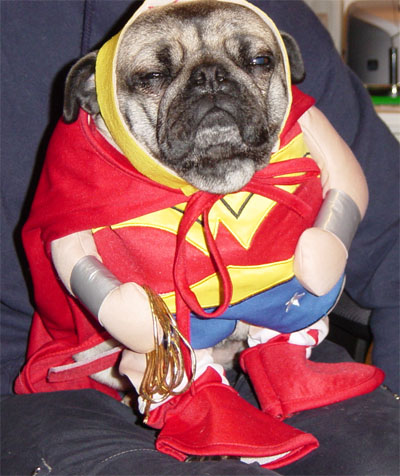
I didn't start this log to express myself or define myself or to rant or whine or vent; I didn't start it to titillate or to provide the constant window into my consciousness that I'm sure no one wants because most of my consciousness is sort of like the fight between the dog in the chair and the photographer. I started it to practice an entirely different kind of writing, namely, the personal essay, in a space I thought would be more encouraging than the notebooks I have always filled and rarely gone back to read. It's public enough to be motivating, anonymous enough to be safe. Like therapy.
But I can't help noticing just how much writing is out there, most of it not only recent but instant, new information becoming available every minute, a steady current within the ever-roaring stream of opinion and critique. Why add my voice to the river of others? Or, more to the point, what makes writing worth reading to someone who didn't write it?
This is the train of thought that led me to start throwing around this rather weighty phrase "The Truth of Human Experience." I like how it scans; the rhythm is right. I wonder if maybe I've heard it somewhere before. It sounds a bit like something I would have railed against in college, and I'm not sure I quite believe in it now. I certainly don't use it to imply that the human experience is singular or in any way reducible to a clutch of morals, or that meaning can be extracted like syrup from the business of living. Instead, I like to picture an ore the earth is rich with, that runs in veins beneath mountains waiting for someone with a pick-ax and a stick of dynamite to take on the backbreaking task of hauling it out into the light. It would be crude, craggly, no two chunks the same, each heavy as a soaked collie. Still, it could power factories, light cities for days.
Anyway, that's what I'm looking for. I'll let you know what I find.
Saturday, January 26, 2008
I brought my teddy bear and my lip gloss
We saw the Kronos Quartet perform this morning at a family matinée in the strangely void neighborhood banked with stone walkways and blunted trees near City Hall. The civic heart of San Francisco is cold and impersonal; the bodies of the tired are draped over benches. Occasionally a skate-boarder skids by. And then it is flooded for brief but frequent intervals with ladies holding up handfuls of skirt to keep the hems from dragging on the way from dinner in nearby Hayes Valley to the opera, their gloved hands resting delicately in the crook of an elbow, their minds on higher things. If the concert halls have made the area into a sort of destination it is an accidental or arbitrary one. Patrons go where the music is but they go like tourists, seeding a second economy to cater to their tastes that somehow doesn't ever bleed into the local community itself.
We were all surprised that the Kronos Quartet was involved in a family anything: avant-garde chamber music hardly seems like a big draw for the Sesame Street set, but the hall was packed and out of every other seat peaked a little head with a little bowl of hair on top, barely high enough to see over the chair in front of them, let alone the person sitting in it. The Quartet played an endearing hour-long set of songs from around the world. They introduced each song with a short blurb about where it came from that was pitched to the level of those in the audience who maybe had not yet seen a globe.
The second song was from China. "This is played when people fall in love," the first violinist said, before sliding into a tune that was like a metal see-saw, balancing in the rain. Notes fell all around. Not when people are in love; not when they're engaged, not when they get married: when they fall. But when do they?
The eerie spatter of melody suggested a national string quartet charged with divining in which park someone is standing right now with someone else under a tree, wishing they could reach up and break off a leaf-shaped piece of light from between the leaves. A wandering ensemble carrying their violins from village to village hoping to catch the exact moment a woman looks up from a collar she is pinning to the line, to see the cloth go slack in her hands, to follow her fleeing gaze. They wouldn't march up and introduce themselves. They would choose a spot off to the side, almost beyond the frame. No one would leave tips, recognizing them as state employees. The drip of notes would be steady and their bowed heads would bob gently in time.
At the end of the concert, the children were invited to come up on stage and ask questions. A little girl tottered to the microphone. "I brought my teddy bear today and my lip gloss," she said. It was a question, and the answer was Tinkerbell. Children, it turns out, are natural surrealists, and perhaps the best audience for contemporary music after all.
We were all surprised that the Kronos Quartet was involved in a family anything: avant-garde chamber music hardly seems like a big draw for the Sesame Street set, but the hall was packed and out of every other seat peaked a little head with a little bowl of hair on top, barely high enough to see over the chair in front of them, let alone the person sitting in it. The Quartet played an endearing hour-long set of songs from around the world. They introduced each song with a short blurb about where it came from that was pitched to the level of those in the audience who maybe had not yet seen a globe.
The second song was from China. "This is played when people fall in love," the first violinist said, before sliding into a tune that was like a metal see-saw, balancing in the rain. Notes fell all around. Not when people are in love; not when they're engaged, not when they get married: when they fall. But when do they?
The eerie spatter of melody suggested a national string quartet charged with divining in which park someone is standing right now with someone else under a tree, wishing they could reach up and break off a leaf-shaped piece of light from between the leaves. A wandering ensemble carrying their violins from village to village hoping to catch the exact moment a woman looks up from a collar she is pinning to the line, to see the cloth go slack in her hands, to follow her fleeing gaze. They wouldn't march up and introduce themselves. They would choose a spot off to the side, almost beyond the frame. No one would leave tips, recognizing them as state employees. The drip of notes would be steady and their bowed heads would bob gently in time.
At the end of the concert, the children were invited to come up on stage and ask questions. A little girl tottered to the microphone. "I brought my teddy bear today and my lip gloss," she said. It was a question, and the answer was Tinkerbell. Children, it turns out, are natural surrealists, and perhaps the best audience for contemporary music after all.
Saturday, January 05, 2008
Tragedy and Identity
I first became interested in tragedy in 2004, studying abroad in Paris. I signed up for a course called "La Littérature de la Tragédie" or something to that effect, under the mistaken impression that "tragédie" was being used in the colloquial sense of "something really really bad/sad that happens," which is often used to describe things like natural disasters, fatal accidents, young people succumbing to sudden illnesses. The course was actually about the literary genre, introduced by the ancient Greeks, that is both highly structured and superbly beautiful, if a bit stiff at times. The lecturer was a small bearded man who gave lots of examples of I was never quite sure what.
Although not exactly what I expected, the course had a big impact on me: I went on to write an undergraduate thesis on a neoclassical French tragedian and have been fascinated by the subject ever since. We read Medea, Hofmannsthal's Elektra, and Ibsen's The Ghosts in French, and King Lear in English. I think the other students found something ironic in my having moved 3000 miles to study a book in English. I found it surprising how well they knew and how much they loved Shakespeare -- I even found a Lear reference in the name of a bookstore, Le Roi Lire, across the street from the coldly geometric Jussieu.
One aspect of tragedy that intrigues me is the number of them, which is not many: the same handful of very famous tragedies are studied by everyone, again and again, year after year, century after century. They are pored over, plunged, and reconfigured in essays, musical adaptations, oil paintings. The possibility of writing new ones is often disputed and may very well be impossible; no one is certain. Compared to the abundance of novels, and even short stories, which spill these days from handbags and airport bookstores and overflow the pages of the weekly reviews that we skim frantically, hoping to get the gist of all those pages we will never have time to sit down and read properly, the lonely tragedies seem to shine, precious, apart.
This repetition raises a question, which perhaps would only come up now, in the age of the novel, when novelty is taken as the stamp of a true artistic venture: why do we read the same stories, over and over, even when we know how they end? For it seems to me that is one of the fundamental characteristics of a tragedy: the ending is a given, and so it becomes a sort of starting point. We do not go to see how everything will turn out but to see it turn at all.
I have puzzled over this for a long time, probably because I had no more than a smattering of Freud in college.
But recently, reading Joan Didion's The Year of Magical Thinking, the answer suddenly occurred to me, so obvious I wonder if I haven't actually heard it somewhere before and forgotten it. We return collectively and without cease to the tragic plays as we return individually to personal traumas we have witnessed or sustained. It is a way of dealing with loss and with the fear of loss, to worry it like a gap where a tooth has gone missing, to replay it, to quite literally re-tell it, not just to repeat it but to tell it in a different way as if an alternate wording might somehow fix or forestall what went wrong. That is what I've understood, at least, from reading her account of loss.
There is another reason, too, that I've come to from my own experience as a reader: tragedy is a form of inoculation. We know things do not work out well for Medea or for Phaedra or, most of the time at least, for Iphigenia. But that is who they are. They are here, quite simply, to err and to suffer and expire on our stages, at our feet, on our lips. If tragedy is a part of who they are, we are the living, clapping politely at the end of each act, trying not to knock against our neighbors' knees as we squeeze past them on the way to the restroom or the lobby, leaning against a stone column drinking a plastic cup of white wine and talking softly about how rousing the production is.
I bought Joan Didion's book at Dog-Eared Books on Valencia St. knowing exactly what it was about. Because I knew what it was about, I had not been interested in reading it until a close friend said it was the most accurate account of grief she had read. Before I read it I had, almost without realizing it, cast its author as a tragic heroine, someone to whom loss clung, someone destined for misfortune. I thought this way because thinking this way is a form of inoculation. If she is a tragic heroine than I must not be, because I am the friend or the nurse or because I am outside the story altogether and I can close the book whenever I want to.
Although not exactly what I expected, the course had a big impact on me: I went on to write an undergraduate thesis on a neoclassical French tragedian and have been fascinated by the subject ever since. We read Medea, Hofmannsthal's Elektra, and Ibsen's The Ghosts in French, and King Lear in English. I think the other students found something ironic in my having moved 3000 miles to study a book in English. I found it surprising how well they knew and how much they loved Shakespeare -- I even found a Lear reference in the name of a bookstore, Le Roi Lire, across the street from the coldly geometric Jussieu.
One aspect of tragedy that intrigues me is the number of them, which is not many: the same handful of very famous tragedies are studied by everyone, again and again, year after year, century after century. They are pored over, plunged, and reconfigured in essays, musical adaptations, oil paintings. The possibility of writing new ones is often disputed and may very well be impossible; no one is certain. Compared to the abundance of novels, and even short stories, which spill these days from handbags and airport bookstores and overflow the pages of the weekly reviews that we skim frantically, hoping to get the gist of all those pages we will never have time to sit down and read properly, the lonely tragedies seem to shine, precious, apart.
This repetition raises a question, which perhaps would only come up now, in the age of the novel, when novelty is taken as the stamp of a true artistic venture: why do we read the same stories, over and over, even when we know how they end? For it seems to me that is one of the fundamental characteristics of a tragedy: the ending is a given, and so it becomes a sort of starting point. We do not go to see how everything will turn out but to see it turn at all.
I have puzzled over this for a long time, probably because I had no more than a smattering of Freud in college.
But recently, reading Joan Didion's The Year of Magical Thinking, the answer suddenly occurred to me, so obvious I wonder if I haven't actually heard it somewhere before and forgotten it. We return collectively and without cease to the tragic plays as we return individually to personal traumas we have witnessed or sustained. It is a way of dealing with loss and with the fear of loss, to worry it like a gap where a tooth has gone missing, to replay it, to quite literally re-tell it, not just to repeat it but to tell it in a different way as if an alternate wording might somehow fix or forestall what went wrong. That is what I've understood, at least, from reading her account of loss.
There is another reason, too, that I've come to from my own experience as a reader: tragedy is a form of inoculation. We know things do not work out well for Medea or for Phaedra or, most of the time at least, for Iphigenia. But that is who they are. They are here, quite simply, to err and to suffer and expire on our stages, at our feet, on our lips. If tragedy is a part of who they are, we are the living, clapping politely at the end of each act, trying not to knock against our neighbors' knees as we squeeze past them on the way to the restroom or the lobby, leaning against a stone column drinking a plastic cup of white wine and talking softly about how rousing the production is.
I bought Joan Didion's book at Dog-Eared Books on Valencia St. knowing exactly what it was about. Because I knew what it was about, I had not been interested in reading it until a close friend said it was the most accurate account of grief she had read. Before I read it I had, almost without realizing it, cast its author as a tragic heroine, someone to whom loss clung, someone destined for misfortune. I thought this way because thinking this way is a form of inoculation. If she is a tragic heroine than I must not be, because I am the friend or the nurse or because I am outside the story altogether and I can close the book whenever I want to.
Monday, December 24, 2007
The Limits of Experimental Science
There are two main obstacles to considering one's own life from a rational or scientific point of view: it is nearly impossible to isolate the variables and there is no control group.
For example, right now, at 3:30 in the morning on Christmas Eve Eve, I may have woken up after falling asleep at 10:00 last night because I am still jet-lagged after returning from Paris 3 days ago; because I ate a whole acorn squash for dinner; because my stomach is upset (see reason #2); because I drank coffee after dinner; because I have been seeing old friends who live far away all week at an average rate of 1 friend per day, and by now their faces have collected like coins at the bottom of my dreams enriching me, as a fountain in the plaza of a foreign city, with currency I cannot use; or because my partner is moving away next fall to go back to school, and his absence fans out like a light from that future point disrupting any present, momentary darkness with images of what I might do and where I might go. Or is it some combination of these factors -- jet-lag plus nostalgia, say, or squash mixed with anxiety?
Cause and effect also seem to be unstable. Was my sleep interrupted because I'm burping (see reason #3) or am I burping because my sleep was interrupted? In other words, are we alive in order to work and eat and grieve and give or do we give and grieve and eat and work because we're alive, after all, and there isn't much else to do, especially when the weather's bad?
It's hard to say; the alternative would be to not live in the first place and then work or possibly to not live and not work at all, but no one who has taken either of these paths has anything to say about the matter, at least not to us.
There is a simple, if not easy, way of testing some of these hypotheses: I must take two weeks off from work each winter for a total of at least 6 years and each year when I arrive at my parents' house in western Massachusetts, after spending the afternoon walking near Mansfield Lake with Rachel in a scatter of raindrops that thickens to a downpour as we drive from Great Barrington to Housatonic and she points out between the swipe of her windshield wipers the vacant factories that will soon be converted to dance studios and art colonies, I must either eat squash, or drink coffee, or have a partner who is leaving in the fall, etc.
It would take another few years to test each combination of factors, but after a finite, albeit extended, amount of time I would know why exactly I am awake right now, which may or may not help me fall asleep the next night, but still wouldn't answer the question of whether it's worth it, whether a short essay is better or worse than an hour of sleep, whether anyone, including myself, will care for what I have written enough to outweigh the very good chance that I will get much less done tomorrow and in a much worse mood than I might have otherwise.
Le Couple
Des arbres froids portent des vestes de feuilles
et le couple dans la voiture discute
ce que tous les couples partout discutent :
c'est quelle route il faut prendre
pour arriver, enfin, au but.
Monday, December 03, 2007
A Moment's Notes
Eternity is not an experience of endless duration, it is the absence of duration and should take no endurance to bear.
Many people believe they brush up against it while altered by those special chemicals that inflame the senses until even the most mundane (fog beading on a windowpane, steam curling off a pot of water) swell and soak you up instead of the other way around. So a phrase like "the moment filled an eternity," meaning a momentary sensation absorbed me for longer than a moment, has come to seem cliché.
Although hyperexperience is pleasurable at times, pop-philosophy exhortations to "live in the moment" and "seize the day" exasperate me. These generally lazy statements don't acknowledge the debt our emotional vocabulary owes to time. Feelings may seem to be creatures of the moment, but words like nostalgia, worry, dread, anticipation, wistfulness, and hope show us the extent to which what we feel now is refracted through if and then.
I have glimpsed eternity of late while making tea at work. Every morning I pluck a light purple pocket of earl gray from the metal rack attached to the wall, drop it in my mug, open the fridge to my right, reach for a cool container of milk. As I flip the red hot water spigot and release a thin stream of steaming water, I feel the great turning disk of my day come to a halt. I imagine I hear the muffled clicking, like a lock's heartbeat, of this morning's actions falling exactly into the action of every other morning. And then I know that I am always, always here, at this counter, making one cup of tea forever that I will never drink and all the rest is a dream.
And I have been thinking of eternity in chorus where we sing music that is old -- or "early" as music written in Europe during the Renaissance and baroque periods is called -- comprising many parts that coil around each other in swift counterpoint. It is cooling, meant to be sung like a current slipping beneath a frozen stream, fine and clear. Because the multiple melodies move in different directions at once they sometimes undo each others' work, filling in the gaps that might otherwise catch a listener short. Single voices silver to the surface and then disappear back into the dense mesh of parts. Because the earlier music is more static harmonically, its expansion is spatial, opening onto wide fields of ice. And because the intervals and chords permitted are limited by what was considered consonant at that time (thirds were just becoming acceptable), because these pieces don't express emotion by varying dynamics or tempo but instead, like the mechanism of a clock, by perfectly and precisely integrating parts into a functioning whole, these songs may seem to lack the directional spine that shapes the classical and romantic music we are more familiar with.
Many people believe they brush up against it while altered by those special chemicals that inflame the senses until even the most mundane (fog beading on a windowpane, steam curling off a pot of water) swell and soak you up instead of the other way around. So a phrase like "the moment filled an eternity," meaning a momentary sensation absorbed me for longer than a moment, has come to seem cliché.
Although hyperexperience is pleasurable at times, pop-philosophy exhortations to "live in the moment" and "seize the day" exasperate me. These generally lazy statements don't acknowledge the debt our emotional vocabulary owes to time. Feelings may seem to be creatures of the moment, but words like nostalgia, worry, dread, anticipation, wistfulness, and hope show us the extent to which what we feel now is refracted through if and then.
I have glimpsed eternity of late while making tea at work. Every morning I pluck a light purple pocket of earl gray from the metal rack attached to the wall, drop it in my mug, open the fridge to my right, reach for a cool container of milk. As I flip the red hot water spigot and release a thin stream of steaming water, I feel the great turning disk of my day come to a halt. I imagine I hear the muffled clicking, like a lock's heartbeat, of this morning's actions falling exactly into the action of every other morning. And then I know that I am always, always here, at this counter, making one cup of tea forever that I will never drink and all the rest is a dream.
And I have been thinking of eternity in chorus where we sing music that is old -- or "early" as music written in Europe during the Renaissance and baroque periods is called -- comprising many parts that coil around each other in swift counterpoint. It is cooling, meant to be sung like a current slipping beneath a frozen stream, fine and clear. Because the multiple melodies move in different directions at once they sometimes undo each others' work, filling in the gaps that might otherwise catch a listener short. Single voices silver to the surface and then disappear back into the dense mesh of parts. Because the earlier music is more static harmonically, its expansion is spatial, opening onto wide fields of ice. And because the intervals and chords permitted are limited by what was considered consonant at that time (thirds were just becoming acceptable), because these pieces don't express emotion by varying dynamics or tempo but instead, like the mechanism of a clock, by perfectly and precisely integrating parts into a functioning whole, these songs may seem to lack the directional spine that shapes the classical and romantic music we are more familiar with.
If a Mozart aria presents a sonic narrative that evolves, modulates, and resolves like the phases of a moon or a love affair, a Palestrina mass stretches out like the sea at night, and notes shimmer across its face, tiny quivering panels of light suggesting the immensity of the water all around.
Singing this music in the context of its creation -- the Catholic Church -- I have come to think of the qualities of early music as not merely stylistic but also symbolic choices. The world of the Church is an eternity machine, created and completed in beauty to run until it runs out. The world of the enlightenment is a work in progress; we who inhabit it burst forward at times only to be slung back again by forces beyond our control.
The wonder is that these two worlds exist not only side by side but also within each other, that from the arcing shoreline we can look out onto a sea whose waves are always cresting and never break, and then turn around and walk back up the beach, towards the parking lot.
Sunday, October 28, 2007
Best Publisher EVER
In 1989, J.B. ("Jibé") Pontalis started the imprint "L'Un et l'autre" at the French publishing house Gallimard.
It's a conceit only the French could think profitable, but, for a translation junkie and adaptation fetishist, also a thrilling enterprise: a collection of books dedicated to stories told at an angle by narrators whose subjects are famous works or famous people and whose object is to climb inside these structures worn smooth by familiarity and see the world through them instead of in them. Each story, as with any act of mediation, is the story of the story and the story of its telling, the story of the triangle made between narrator and event and reader, a triangle of eyes trained on each other, devouring each other.
At newstands these days one finds a glut of celebrity profiles, one leg of the triangle. How refreshing to tilt the viewfinder for a moment to explore the experience of the viewer instead of the viewed. To live within the effects of art instead of trying to wriggle back into the intentions behind it.
This is what L'Un et l'autre has to say about itself, on the dustjacket of Monsieur Bovary:
"Life stories, but as invented by memory, remade by imagination, brought to life by passion. Subjective accounts, a thousand miles away from traditional biography.
Someone and an Other: the author and his secret subject, the painter and her model, linked by a powerful and intimate bond. Where is the line between portrait and self-portrait?
Someones and Others: those who burst onto center stage as well as those who only perform in the theater of our minds, people and places, forgotten faces, names effaced, silhouettes misplaced."
(translated by The Bunny)
http://www.gallimard.fr/collections/fiche_unautre.htm
It's a conceit only the French could think profitable, but, for a translation junkie and adaptation fetishist, also a thrilling enterprise: a collection of books dedicated to stories told at an angle by narrators whose subjects are famous works or famous people and whose object is to climb inside these structures worn smooth by familiarity and see the world through them instead of in them. Each story, as with any act of mediation, is the story of the story and the story of its telling, the story of the triangle made between narrator and event and reader, a triangle of eyes trained on each other, devouring each other.
At newstands these days one finds a glut of celebrity profiles, one leg of the triangle. How refreshing to tilt the viewfinder for a moment to explore the experience of the viewer instead of the viewed. To live within the effects of art instead of trying to wriggle back into the intentions behind it.
This is what L'Un et l'autre has to say about itself, on the dustjacket of Monsieur Bovary:
"Life stories, but as invented by memory, remade by imagination, brought to life by passion. Subjective accounts, a thousand miles away from traditional biography.
Someone and an Other: the author and his secret subject, the painter and her model, linked by a powerful and intimate bond. Where is the line between portrait and self-portrait?
Someones and Others: those who burst onto center stage as well as those who only perform in the theater of our minds, people and places, forgotten faces, names effaced, silhouettes misplaced."
(translated by The Bunny)
http://www.gallimard.fr/collections/fiche_unautre.htm
Tuesday, October 16, 2007
In Which the Bunny Rants About Why Free-Market Capitalism is Not the Answer to Everything
Exchange at a weekly meeting of libertarians, as reported by The New Yorker:
At one point, Niederhoffer interrupted him and asked, “What are the general principles?” DiLorenzo replied, “Markets work and government-run monopolies don’t.”
[...]
Don’t you agree that the government does some things well? the man asked. “No,” DiLorenzo replied. “The government has screwed up the national parks. I think capitalism would do a much better job with land.”
--http://http//www.newyorker.com/reporting/2007/10/15/071015fa_fact_cassidy?currentPage=9
Why are some people so in love with the free market? Whence this urge to privatize everything from kindergarten to camping trips? Is it because the free market has promised to make their skin better and their ass firmer and their soulmate...appear? Perhaps. But I think they love it like cold fusion: because it is beautiful and potentially very powerful, and, because no one's proven it actually works, seems like that great discovery anyone of us could be on the verge of making. Any day now.
The apparent beauty of the system is the abstraction of currency: a dollar is an empty marker of value, a door that opens onto a different scene each time it swings. Individuals and groups collaborate to define these abstract values by balancing expended effort against experienced wants and needs, creating a de facto democracy of desire. Nothing is innately valuable, nor is value imposed by a state or religious authority. Each individual is free to define things and phenomena and even other people as being valuable, and to turn the product of their work into as near a picture of their happiness as possible. The beautiful market is a creature that thinks for itself using all of our minds.
The hidden brutality of the system is the trajectory of currency, which, unlike water, tends to flow uphill, a scum of power trailing in its wake. Since the only way to vote is by spending money, in a truly free market the poor are completely disenfranchised, and everyone but the very wealthy can only be considered to be somewhat franchised. Speak of meritocracy all you want, but there are some things no one should have to earn, including such luxuries as having enough to eat, a place to sleep, clean clothes to wear, medical care, education, public transportation, clean water, fresh air, and access to information, and these are precisely the sorts of things that people who don't have a lot to begin with lose when privatization strikes. Apparently it is not only hands but entire people who may be invisible in the eyes of the market.
And so I wonder: are those who advocate this system so seduced by the cold gleam of its elegance they fail to see how sharp is its edge?
Or do they see and just not care?
At one point, Niederhoffer interrupted him and asked, “What are the general principles?” DiLorenzo replied, “Markets work and government-run monopolies don’t.”
[...]
Don’t you agree that the government does some things well? the man asked. “No,” DiLorenzo replied. “The government has screwed up the national parks. I think capitalism would do a much better job with land.”
--http://http//www.newyorker.com/reporting/2007/10/15/071015fa_fact_cassidy?currentPage=9
Why are some people so in love with the free market? Whence this urge to privatize everything from kindergarten to camping trips? Is it because the free market has promised to make their skin better and their ass firmer and their soulmate...appear? Perhaps. But I think they love it like cold fusion: because it is beautiful and potentially very powerful, and, because no one's proven it actually works, seems like that great discovery anyone of us could be on the verge of making. Any day now.
The apparent beauty of the system is the abstraction of currency: a dollar is an empty marker of value, a door that opens onto a different scene each time it swings. Individuals and groups collaborate to define these abstract values by balancing expended effort against experienced wants and needs, creating a de facto democracy of desire. Nothing is innately valuable, nor is value imposed by a state or religious authority. Each individual is free to define things and phenomena and even other people as being valuable, and to turn the product of their work into as near a picture of their happiness as possible. The beautiful market is a creature that thinks for itself using all of our minds.
The hidden brutality of the system is the trajectory of currency, which, unlike water, tends to flow uphill, a scum of power trailing in its wake. Since the only way to vote is by spending money, in a truly free market the poor are completely disenfranchised, and everyone but the very wealthy can only be considered to be somewhat franchised. Speak of meritocracy all you want, but there are some things no one should have to earn, including such luxuries as having enough to eat, a place to sleep, clean clothes to wear, medical care, education, public transportation, clean water, fresh air, and access to information, and these are precisely the sorts of things that people who don't have a lot to begin with lose when privatization strikes. Apparently it is not only hands but entire people who may be invisible in the eyes of the market.
And so I wonder: are those who advocate this system so seduced by the cold gleam of its elegance they fail to see how sharp is its edge?
Or do they see and just not care?
Saturday, October 06, 2007
A Day at the Beach
ropes of whip kelp
dug from the sea's damp flank
lash ankle to hip to wrist,
stalk to joint, catch
the errant limb in their knotted wrack.
which way
is the other way
which turn the unbinding turn
to turn loose
such an accidental coil?
Subscribe to:
Comments (Atom)